Laundering Consent
Laundering Consent: Reconsidering Responsibility for the Coldstream Report of 1960
By Kate Aspinall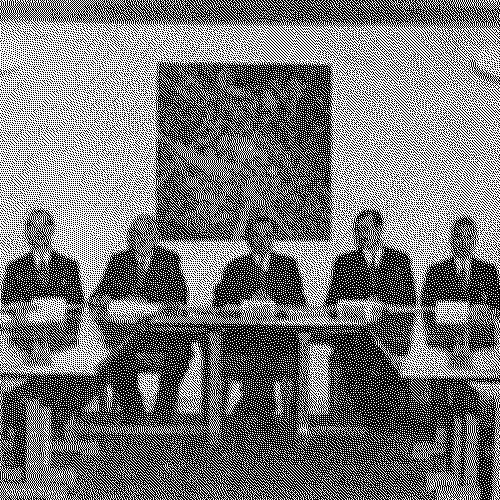
Abstract
The publication of the First Report of the National Advisory Council on Art Education in 1960, also known as the Coldstream Report, is a graspable moment of displacement in the English art world. It represents a shift between educational paradigms, and its legacy is marked by creative outbursts and political revolt. Both the report and the artist and educator who lent it his name, William Coldstream, have been blamed and demonised. More than half a century later, with ministerial records open, reconsideration of the dynamics that went into the creation of the report offers a new perspective on the driving forces of this seminal moment in English art history, suggesting the influence not only of other council members but also of the Ministry of Education, ultimately complicating notions of personal responsibility within collective authorship.
Introduction
In the second half of the twentieth century, Britain became a global exporter of creativity. Much of this success is due to the tertiary diploma system for art and design. As spaces of social foment and critical awareness, British art colleges in the post-Second World War period gave the world successive waves of irreverent, accessible, ambitious, confident, and performance-conscious artists, culminating with the so-called Young British Artists (YBAs) in the 1990s. Aside from those who adapted their learning towards breaking down barriers in the art market, some went on to innovate within other sectors, such as writing and music, while others engaged in nation-building in newly emancipated former colonies as graduates founded centres for artistic training that used their various experiences of British tertiary art education as a model—albeit as both a positive and a negative one.1 Art education in post-war Britain thus had an unusually outsized impact for a relatively small country. This period, however, was far from stable. Nurtured in a general, post-war expansion of art patronage, commerce, and egalitarian values for higher education, a new tertiary arts educational model was born out of a traumatic reform initiated in 1960 by the publication of the First Report of the National Advisory Council on Art Education, more commonly called the Coldstream Report (fig. 1).2
1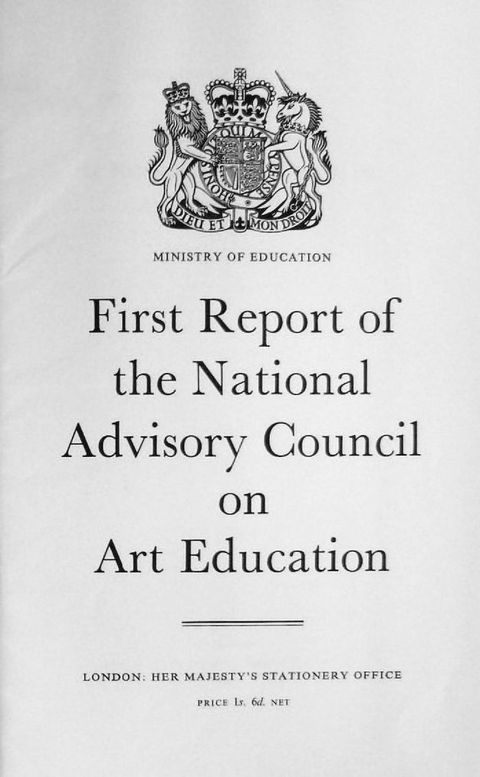
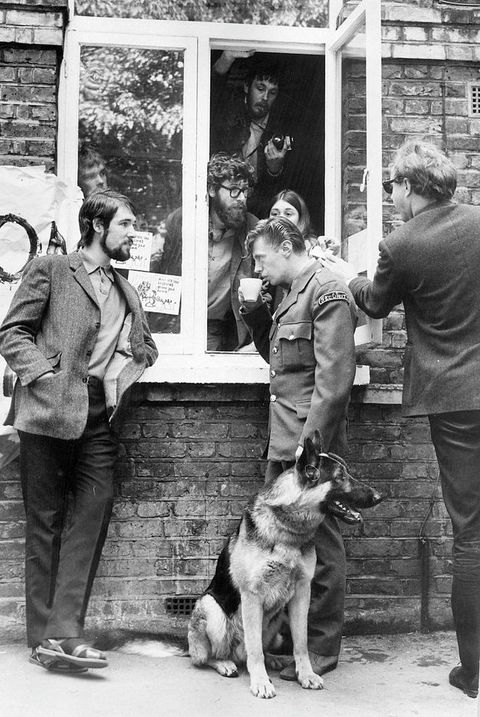
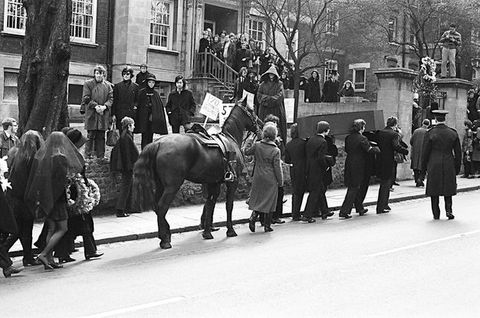
Since its publication the report has been both lauded and vilified. Controversy only deepened as the 1960s matured, spilling over into political revolt as well as creative outbursts. The report became a lightning rod for art students attuned to the greater awakening of political activism on campuses across Britain, which culminated in the student protests of 1968. Demands for more participatory democracy, not only within the governing bodies of higher educational centres but also on the national stage, were gaining force in concert with a broader political appetite for reforming leftist politics in Britain. In journals such as the Universities & Left Review and The New Reasoner, which merged in 1960 to become the influential New Left Review, editorials by theorists such as Stuart Hall and Edward Thompson inspired critiques of the status quo and calls for nuclear disarmament, anti-imperialism, and thinking beyond classist hierarchies as well as attacks on the post-Second World War Labour government’s reforms as mere efforts to stabilise capitalism and a growing disillusionment with the Marxism–Leninism of the Communist Party after the invasion of Hungary by Soviet forces in 1956.3 Even where art students were only loosely engaged in leftist politics, an atmosphere of dissent and political empowerment fuelled dramatic student actions, such as the seizures of the administration (or sit-ins) at Hornsey and Brighton colleges of art in 1968 and the Willesden protest, which involved students carrying a coffin into the Ministry of Education after their school was closed down (figs. 2–4).4
3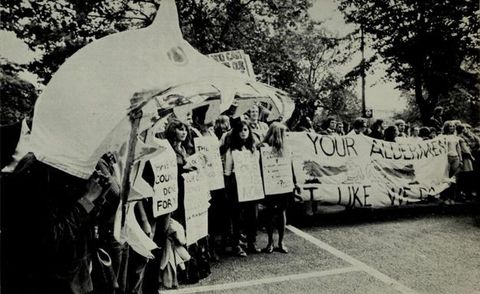
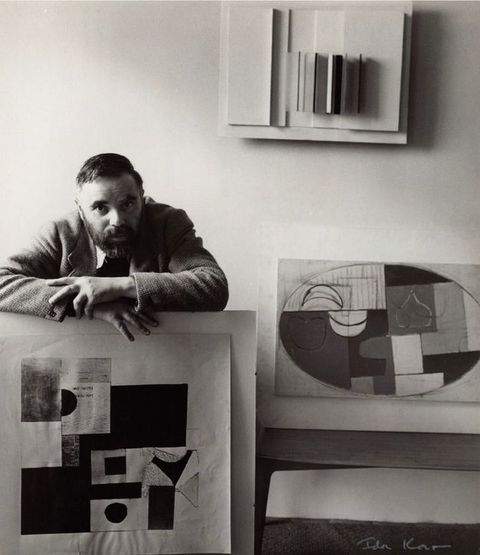
The vigour of such protests has obscured the report’s actual content and context. Even many decades after its implementation, this remains true, as was demonstrated at the “Art School Educated” conference at Tate Britain in 2014, when the responsibility for the consequences of the report were contested: opinions clashed as to whether responsibility lay with the chair of the council that authored it, William Coldstream, or with one of its delegates, the artist Victor Pasmore (figs. 5 and 6).5 The terms of this debate were framed by a statement Coldstream made to the art historian Lynda Morris in an interview in 1985: “While the committee was sitting Victor Pasmore organised the Developing Process exhibition with Harry Thubron, Richard Hamilton and Tom Hudson, at the ICA [Institute of Contemporary Arts]. They were very successful with the Bauhaus idea and there was little I could do against the tide of opinion. . . . It should have been called the Pasmore Report, then people would have understood what was happening”.6 A conflation of the Coldstream Report and Coldstream the man is common in much of the evaluative literature, fuelled by the governmental convention of calling ministerial reports by the last name of their chairs, and exemplified by an article by Jon Thompson in 2005, who was head of the Department of Art at Goldsmiths at the time of the YBAs’ ascendancy.7 He wrote of the report in terms of Coldstream’s personal vision, even claiming that Coldstream appointed the other delegates, which is not true.8 That Coldstream abdicated authorial responsibility twenty-five years later testifies to the weight of its legacy, and Pasmore does present an enticing alternative. He, as Coldstream referenced and I will discuss later, was an innovative educator alongside his successful art practice. His ideas about what art skills could be taught presented a radical rethinking of the status quo and have only grown in popularity—including laying the groundwork for the United Kingdom’s current foundation courses. Coldstream’s delegation of responsibility to Pasmore, however, has misdirected debate towards weighing personal accountability and presented two main problems: the first is attributing a collectively authored report to a single agent, and the second is that by doing so art historians dodge acknowledging the full implications of collective activity. In our current age of political populism, the dangers of reducing complex mechanisms to the mythologies around charismatic figureheads is all the more apt.
5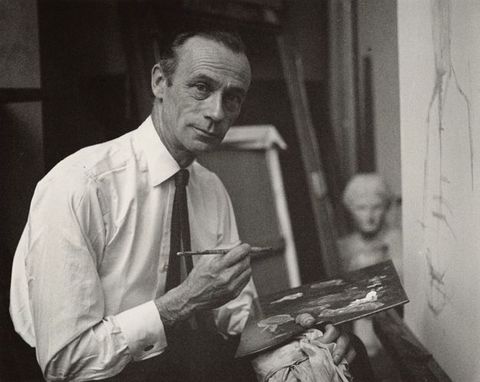
The key to the report’s mystery is much more interesting than personal attribution, albeit messier. It lies with the central government department in charge of overseeing education, which at the time was known as the Ministry of Education. Its archive is now held at the National Archives in Kew.9 It was unsealed in 1992. Included therein are minutes of the council meetings—the most relevant being the eleven meetings that occurred before the publication of the first report (between 5 February 1959 and 23 November 1960), of which ten survive10—as well as extensive correspondence between ministers, ministry assessors, and Coldstream, which together reveal a different dimension to the question of accountability. Responsibility was complicated not only by the collective nature of the council but also by how key outcomes were decided through a chain of other expert councils in conversation with different ministers of education, all of which were heavily mediated by a small body of ministry civil servants led by Antony Part. My research suggests that, in contrast to popular perception, the convening of the Coldstream Council was a strategic measure to pre-empt and placate public pushback to pre-decided reforms. In other words, the majority of its most contentious reforms were not engineered by the council but, rather, had been carried over from a series of prior independent councils and imposed by the ministry. The role of the Coldstream Council was to sell to the public a perception of the reforms as emerging from within rather than from without the art world.
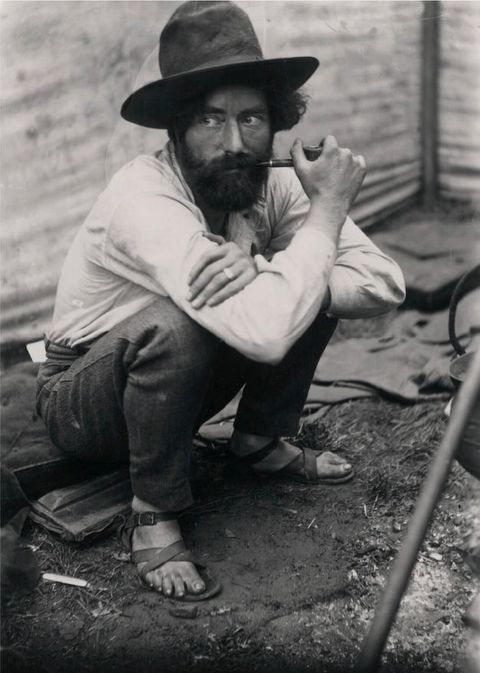
9The evidence of the ministry’s involvement challenges notions that Coldstream’s vision (or that of any single agent) lurks behind the report as a whole, and yet it does not negate the impact of individuals’ influence within the council discussions or that these discussions influenced the final form of the report’s recommendations, honing language and emphasis. Collective authorship can be unpicked even if it cannot be reduced to singular agency, and doing so with the aid of the ministry archive uncovers a valuable time capsule. The council represents an unlikely gathering of prominent figures from across the various sectors of the English art world, who met regularly in a room over the course of a year to self-consciously debate and define a new public identity for artists. The result was a reorientation within elite fine art programmes away from invoking bohemian outsider-hood (think Augustus John in his horse-drawn caravan or the Bloomsbury group frolicking around Charleston) and towards being designers and professionals (such the sober suits of Gilbert & George or the sharp tailoring of Duggie Fields) (figs. 7 and 8).
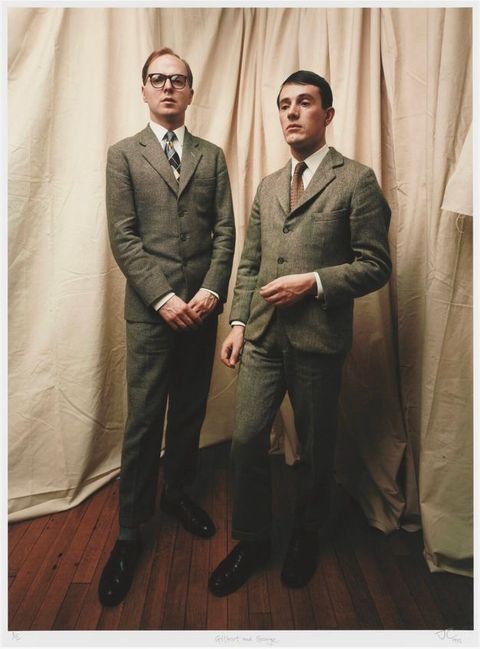
This article looks at both aspects of the report—its enmeshment in political practicalities and its historical importance—as an opportunity to explore a shift between concepts of what artists and artistic work were. I approach the report with an interest in issues that affect artists self-consciously aspiring to exhibit work, who at the time were called “fine artists”. Discussing the full implications of the report for other aspects of education or for designers is outside my scope. In presenting my argument that the report is an edifying, if complex, example of collective authorship, I have divided the article into three sections. The first establishes what the report, its reforms, and its impact were. The remaining sections address the various workings of influence. The second section looks to the nature of ministerial involvement, and the third addresses the Coldstream–Pasmore myth in more detail, weighing their contributions alongside those of another delegate, Robin Darwin, who emerges from the ministry materials as also influential. The conclusion considers the challenges that collective engagements, such as the report, present to art historians.
The Report: Its Context and Impact
Before addressing the various workings of influence within the report, it is useful first to establish the basic details of the report as the product of a collective effort, in other words what it was, who wrote it, and why. The report as a document is unassuming. It is a slim, unadorned pamphlet, just twenty-one pages in length, published in 1960 by the Ministry of Education.11 It was authored by the National Advisory Council on Art Education, otherwise known as the Coldstream Council, though I shall refer to it here primarily as “the council”. It was a committee made up of thirty-one delegates, who were nominated by institutions that had been invited by the ministry to put forward candidates. The significance of this make-up was that an unlikely array of leaders of their fields were brought together, representing institutions ranging from teachers’ unions, museums, and art colleges to more commercial concerns, such as the Council of Industrial Design and the Association of Municipal Corporations.12 Seven of the delegates were direct appointments by the Ministry of Education; in addition to Coldstream, there were celebrities in the fields of advertising, aeronautics, and art history, to name just a few. Coldstream, as already mentioned, was appointed chair by the ministry (though he was not the ministry’s first choice13). The council elected as vice chair Frank Freeman, the director of education for Southampton, the delegate for the Association of Art Institutions, and a veteran advisory councillor (e.g., the Freeman Council, which will be discussed later).14 This entire assemblage of what one ministry assessor called “prima donnas” were guided by the presence of seven ministry civil servants: four assessors and three secretaries.15 The official directive from the Ministry of Education to the council was to “advise the Minister on all aspects of art education in establishments of Further Education”.16 The first advisory assignment, however, was less general and more divisive: to create a framework for scrapping the previous accreditation system and recommending the aims, structure, and implementation policy for a new degree system, wherein individual art colleges would operate with more autonomy and responsibility. The council deliberated for a little over a year and laid out its vision in the first report. Although it published three additional reports during its long tenure (1959–70), the impact of the first made it a metonym for the whole, so that when people refer to the Coldstream Report, they refer to the first one.17 Implementation quickly turned to controversy, and the first report became a graspable moment of displacement between old and new educational models.
11The report’s recommendations stripped the right to award qualifications from institutions that had previously participated in the centrally administered award system. Accreditation could be regained by proposing new courses, designed within the new framework. The new guidance required entrants to be eighteen years old, to be well educated not just in art but also in general subjects, and to have a minimum of five O levels. Courses were to be three years long rather than four and equivalent to academic university degrees; “complementary” studies (such as art history or theory) were compulsory; and over-specialisation, especially a narrow focus on craft, was to be avoided.18 This brought art colleges into greater alignment with the ethos of “liberal studies”, where general learning is grounded on exposure to a range of humanistic subjects—a movement related to the international taste for “liberal arts” degrees—which cultivated an expansive, transferable intellectual capacity. The hope was that, when this was applied to art higher education, it would stop over-specialisation, facilitate professionalism, and confer a higher social status on the qualifications themselves, which would attest to not just vocational skills but also intellectual capability. This may seem a natural development if not an advancement to us now (many readers are probably the product of multiple generations of a liberal arts education), but it marginalised artistic ability as another form of intelligence.19 Under the new system, students who were artistically talented but less academically inclined were subjected to mainstream markers of intelligence as identified by a then even more narrowly defined rubric for academic performance. The idea that would-be artists had to arrive proficient in general O-level subjects and that, to graduate, they needed to pass written examinations sparked outrage.
18Nonetheless the old system, which had been in place since 1946, was ripe for reform. Oriented around a central standardised diploma system, it came under two types of fire: artistic and bureaucratic. Students could apply for two linked qualifications, the Intermediate Certificate in Arts and Crafts and the National Diploma in Design (NDD), ideally taken one after the other (in that order). These were awarded through designated Ministry of Education evaluation centres, which assessed submitted portfolios. The intermediate certificate was intended to compensate for poor primary and secondary school art education by giving all diploma graduates a standard base for further study. It involved two years of general training and focused on the basic skills of drawing, composition, and design, which were interpreted as a developing sequence of manual techniques in a holdover from a nineteenth-century conception of art education.20 The NDD was also a two-year course, but it focused on one or two of the numerous craft, design, or “fine art” specialisations. Students frequently entered the intermediate at the age of sixteen, instead of studying for A levels; and those who completed their A levels at eighteen, as well as more broadly educated grammar school students, were often discouraged from pursuing art. Ultimately, however, both qualifications were deemed unfit for purpose.
20The NDD rubrics were narrow, prescriptive, and over-reliant on examinations rather than course work. Its structure discouraged educational innovation and, despite ensuring a nationwide standard for graduates, this standard proved to be below the level necessary for teacher training and was widely disregarded by industrial and commercial employers, who preferred to hire students straight from school and provide them with in-house training. It thus failed not only to further students’ artistic exploration but also to improve their employability. This was one reason why in 1949 Coldstream, as the newly appointed head of the Slade, declined to take part in the national system, stating that it would simply have made the college another diploma-oriented preparation course.21 Other institutions, such as the Royal Academy Schools and the Royal College of Art (RCA), also remained independent, consolidating their positions as destinations for students seeking more advanced art study. Crucially, however, quite apart from concerns of quality, administering these qualifications, which involved shipping large quantities of art around the country, was cumbersome and expensive for the ministry. Concerns were raised about these costs as early as 1948, just two years after the diplomas were implemented. The ministry was motivated to find a way to endow institutions with the power to set and grade their own examinations.22 The problem was how to do so while still ensuring qualitative standards. The solution was to deal with the institutions, not the students, by concentrating art degree courses in a smaller number of institutions, which would have more rigorous oversight.
21The council anticipated and resolved the thorny question of how to go about applying for the new status, which was resolved through delegation. The task of designing courses lay with individual art schools and the responsibility for evaluating these course designs fell to a new council, which held sole power for interpreting the Coldstream Report’s recommendations in practice. These were concerned mostly with structure, including entrance age, humanities emphasis, and bureaucratic autonomy. Guidelines about the kinds of teaching might be considered successful were left vague, other than that 15 per cent of the curriculum was to be non-practical—what the report called “complementary studies”, though this wording too is vague, despite being frequently interpreted later as pro-art history and theory. The report’s only firm mandate about the content of art instruction was that all pre-diploma courses should “train students in observation, analysis, creative work and technical control through the study of line, form, colour, and space relationships in two and three dimensions”.23 I will return to this dictate in more detail, but what is relevant here is how the capaciousness of this language could lead to a myriad of interpretations. These vagaries were compounded by the fact that all the institutions were going through the process simultaneously and therefore had no template or guide for what a successful course might look like. This was further complicated by the creation of a new committee in 1961, which was tasked with awarding accreditation.24 It was an executive body independent of the ministry and officially titled the National Council for Diplomas in Art and Design (NCDAD)—usually called the Summerson Council—and was initially chaired by John Summerson, an architectural historian and curator of Sir John Soane’s Museum. It sent panels of assessors to visit applicant institutions, whose reports were then weighed by the parent council. These panels came to have tremendous and sometimes capricious power over the fate of art schools.
23Of the seventy-two art colleges (with 201 courses) allowed to submit applications for diploma-awarding status under the new system, only sixty-one colleges (and nineteen courses) were approved.25 Confusion about how courses would be evaluated led to shock and anger among teachers and students. Maurice de Sausmarez, who was then teaching at the Byam Shaw School of Art, called the aftermath a “diploma daze”, while David Warren Piper, who taught at Hornsey, characterised the scrambling by departments as “hysteria”.26 The educational historian Clive Ashwin observed that the many institutions left without national recognition “were forced to rethink their entire raison d’être”, while some artists, such as Peter Blake, regretted the loss of the old system’s technical rigour.27 Student outrage was compounded by the Robbins Report of 1963, which triggered a major expansion of higher education institutions, and the White Paper of 1966, “A Plan for Polytechnics”, which policed the boundary between vocational and academic institutions.28 As referenced in relation to the rise of the New Left, a newly enfranchised generation of students were awakening to the implications of an unequal class system, let alone wider issues of Cold War nuclear proliferation and the alienation of consumerism. The optics of Summerson panels during their multi-day visits to applicant institutions inflamed anti-authoritarian, anti-bureaucratic, and individualistic sentiments. The most striking protest actions came in 1968 with the aforementioned student seizure of the administrations at Hornsey and Brighton colleges of art.29 According to the historian Lisa Tickner, much of what fuelled the emblematic action at Hornsey was student dissatisfaction with the remaking of art colleges around liberal values, particularly the requirements of O-level entrance grades and complementary studies, which created a “division between creativity and mechanical skill” and imposed a value hierarchy that devalued art making in favour of more conceptual skills.30 There had been pre-existing tension between students and the college administration, and they were reacting predominantly against their principal Harold Shelton’s focus on the report instead of accommodating their desire for more participatory and inclusive learning structures.31 Ironically the interventions displayed by the students demonstrated exactly the kind of sociopolitical self-consciousness and intellectual engagement that the newly academically inspired courses touted, for, as Hornsey staff and students proposed, “the best way of finding out about the world is to turn it upside down”.32
25The general themes and passions of these protests have influenced how the report has been studied, primarily by encouraging scholars to speak about their fears that artistic labour might be reduced to a mechanical skill that would be hamstrung by authorities or, from the opposite side of the spectrum, that the meaningfulness of being a professional would be watered down by the incorporation of art education into the traditional territory of universities. This approach, however, risks conflating the report with the complex terrain in which it was deployed. Unpacking its creation in the light of the Ministry of Education archive reveals a picture that is both more cynical and more nuanced: not only did a collective (in the form of the council) produce the report, but many of its most contentious recommendations (especially entrance requirements and complementary studies) were laundered through the council by the ministry, who used the report as propaganda to deflect perceptions of ministerial responsibility.
The Ministry of Education and Laundering Consent
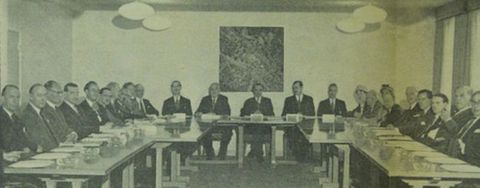
A publicity photograph of its members in 1960 does little to counteract the council’s image of bureaucratic authority embodied in its arc of overwhelmingly white male figures, with Coldstream at its centre, arrayed in dark suits, their faces almost indistinguishable from each other (fig. 9). The optics accentuate the notion of an authoritarian body led by the vision of one man. This was no accident. The ministry needed a body of respected art world authorities who would appear to be responsible for the reforms and thus, ideally, defuse public outrage. In essence, it needed to launder consent by fostering a perception of insider consensus. The secretary to the council, Wilma Harte, acknowledged this in an internal report of 1958, where she noted that any reforms would need to come via a council that is “composed of heavyweights in the art teaching and industrial and commercial design world”.33 A council assessor, F. H. Dowden, wrote similarly that, “If rationalization of art education is to be achieved without a constant stream of PQ’s and hysterical outbursts in the Press it can only happen as the result of advice [from] an independent body of considerable standing. Any direct Ministry-LEA move will raise more storms of protest about autocratic interference and so on, and so on”.34 Avoiding such a “stream of PQ’s and hysterical outbursts” against “autocratic interference” is further emphasised in a memorandum from Gilbert Flemming, permanent secretary of the Ministry of Education, just months before Coldstream’s appointment: “I approach anything connected with the arts rather cautiously because of the contentiousness of artists and their general suspicion of Government. I think one can get into more trouble on a small issue in this sphere than in almost any other”.35 This proved prophetic given the student revolts. And the continued enmeshment of the report’s legacy with discussions of personal responsibility proves the potency of the ministry’s strategy.
33The predetermined recommendations that were fed to the Coldstream Council were in turn the product of a chain of feedback loops between ministers of education and other ministry-commissioned advisory bodies, who were all trying to find a way to extricate the ministry from the costly and time-consuming job of examining art students centrally. Many of the Coldstream Report’s most controversial recommendations were predetermined by a prolonged back and forth between them. That art degrees should echo the values of liberal and academic degrees had been recommended by earlier councils, particularly its immediate predecessor, the Freeman Committee (the National Advisory Committee on Art Examinations, named after its chair), which had commenced in 1949 and had published two reports in 1952 and 1957.36 Its recommendations will sound familiar: that art school entrants should be eighteen years old, that a full-time course be reduced from four to three years, that the intermediate certificate be discontinued, and that some schools be granted additional responsibilities in examining their students. Freeman later became a delegate to the Coldstream Council and is noted in the minutes as arguing in favour of a general liberal education for all.37
36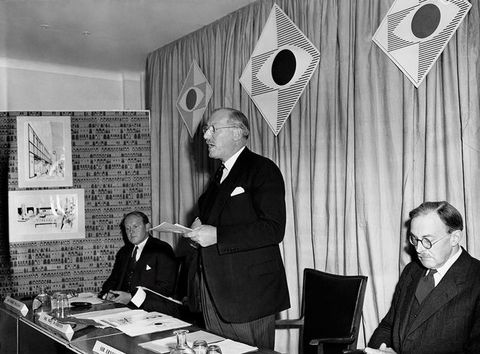
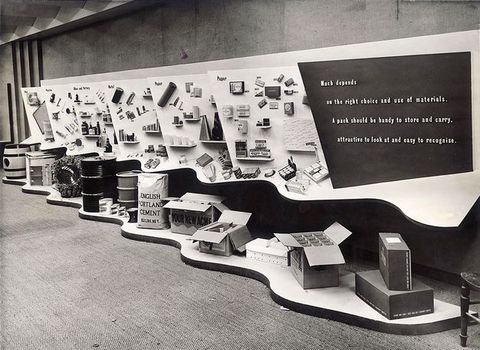
Further mandates came from other sectors of government. Teacher training had been standardised by the Burnham committee in 1949 (the Burnham Primary and Secondary and Burnham Further Education Committees, named after its first chair, Harry Levy-Lawson, 1st Viscount Burnham).38 Teaching accreditation became consolidated across specialisms, including for art college graduates who might seek positions teaching art. This put further pressure on would-be reformers of art education to ensure that art degrees kept their value by conforming to the new Burnham standards of general academic education, thus encouraging requirements such as a minimum number of O levels for artistic study. The industrial and commercial design sector was also a significant political influence on the ministry. Design was regarded as a driving force in the post-war economic recovery. The revitalisation of Britain’s stagnating industrial design sector had inspired the creation in 1944 of the Council of Industrial Design (COID) at the behest of the Board of Trade.39 The COID in turn advocated for what would become the Coldstream Council; it had lobbied that effective reform was possible only with increased prestige and opportunities for designers, which could be achieved only with educational innovation (figs. 10 and 11). The question emerged as to how the new art education could serve the competing interests not only of fine artists and art teachers but also of industrial and commercial designers. The seeds of this binary conception are evident in a COID report written in 1946 by Robin Darwin, rector of the RCA and vocal member of both the Freeman and the Coldstream councils: “The need for good designers has become more urgent and more widely recognised, while the training available to them has become still less in touch with contemporary needs” (fig. 12).40 Of fine art he wrote that “it is open to doubt whether” anything “except in the very rudiments of technique, can be taught at all. Students can be encouraged and stimulated, but little more”.41 This reflects a subtle shift in the perception of artistic identities: where designers were professionals in need of strict training, exhibiting artists were assumed to be outliers, who would seek independent prestige institutions such as the Slade. The identity of fine artists became one of the most contentious points of debate within the council meetings, as I shall discuss in relation to individual delegates. The job presented to the Coldstream Council was to reconcile all the various industry standards and the predetermined recommendations that had been set by previous councils into one overarching system. This council’s dependence on a chain of advisory bodies complicates notions of agency even before we address the collective nature of the council itself. This is further complicated, however, by the nature of the chain and how it was held together and heavily mediated by a small body of ministry civil servants.
38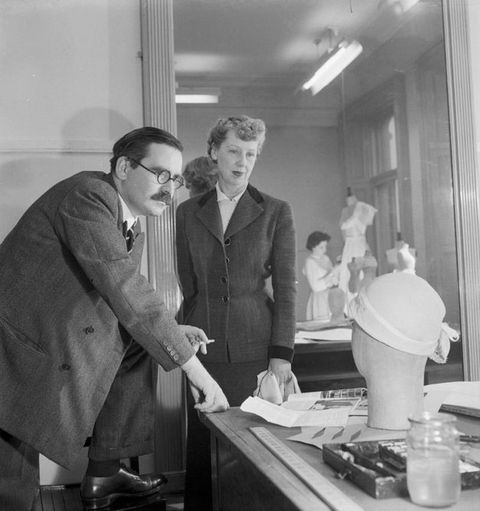
The ministry, as is often the case for many centralised government departments, was composed of both political appointments (usually at its head) and a larger body of professional civil servants.42 The latter were the functionaries that constituted a common thread through the various committees and councils that shaped the Coldstream Report recommendations, which at its broadest spanned from 1952, when the first Freeman Report was published, to 1974, when the Summerson Council disbanded. The group that dealt with these advisory bodies was led by Antony Part, the undersecretary and head of the higher education branch, who was the ministry’s most senior (and influential assessor) to the council (fig. 13). Under him, around the time of the first Coldstream Report, were the assessor Sylvia Goodfellow (who had been instrumental in drafting the Education Act of 1944); two inspectors, C. R. English and F. H. Dowden (the latter of whom had been a vital contact for war artists in the Second World War); and two secretaries, Wilma Harte (who was instrumental in replacing grammar schools with comprehensive schools) and Geoffrey Cockerill—as well as an assistant secretary, D. W. Constable.43 The exact composition of this group changed gently over the wider period—for instance, Part was in the United States during part of the Freeman Council and Cockerill took over from Harte in 1960—and yet, as a group, they remained a point of reference and continuity in a shifting political landscape. Even the minister of education changed twelve times over the broader period, and during the writing of the first report alone there were three different Conservative ministers: Quintin Hogg, who commissioned it and served for just eight months; Geoffrey Lloyd; and David Eccles. Ministerial staff, in contrast, were often veterans. Part’s career at the ministry lasted twenty-five years and Goodfellow’s thirty-eight (with brief interruptions during the Second World War).44 The importance of these experienced civil servants—or “modern mandarins”, as Part characterised himself—was as a stable point of reference in a shifting world, and not only for delegates but also for ministers. The potential for interpretation becoming manipulation was just as present in dealing with ministers as it was for council members. “Ministers [of Education] find it very hard to accept the narrow range in which they can operate”, Harte reflected in 1977: “They start by saying ‘I shall do this’ and then find life just isn’t like that”.45 On the council too Part and Harte were far from passive attachés. In the meetings they were active and analytical participants, and beyond the meetings they played important roles as the means of communication between the ministers, who would sign off on recommendations, and the councils, who would make them. Sometimes, as in the case of the second Freeman Report, this involved months of analysis and interpretive memos, predominantly from Harte, as well as numerous meetings in Part’s office as the group decided what emphasis and interpretation to give each recommendation before passing it on to either Lloyd or Eccles for approval.46
42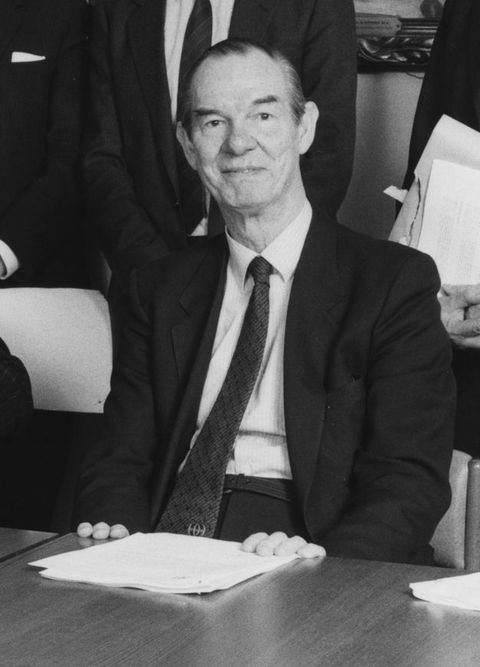
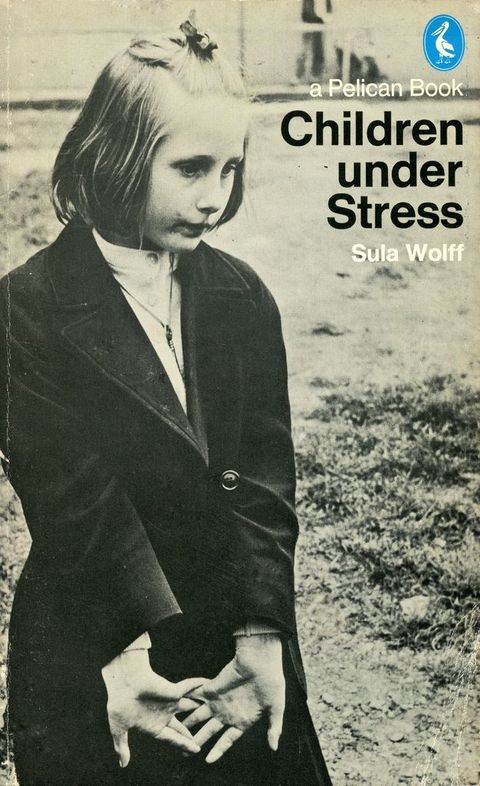
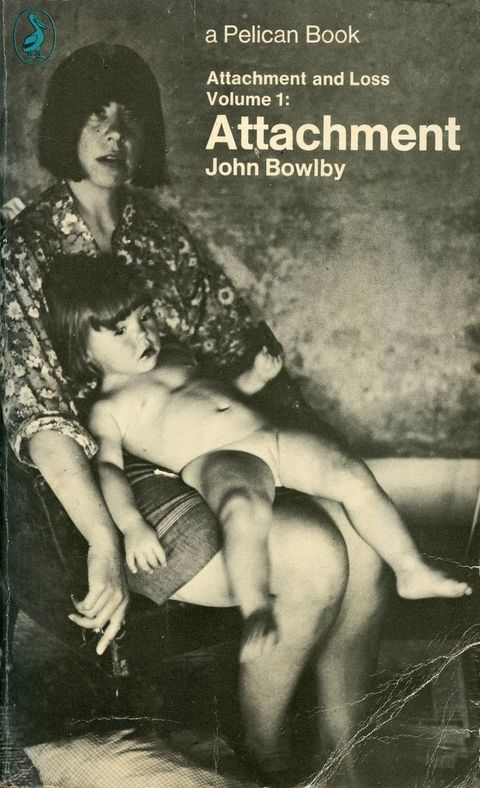
It is telling that the Coldstream Report recommendations that attracted the greatest public controversy aligned for the most part with earlier decisions, namely, to concentrate courses into fewer, but higher quality, institutions; to apply the ideals of liberal education to art; to stop the ministry’s direct control of awards; to model art degrees on existing technology degrees; and to raise the age of enrolment.47 It was Part, Dowden, and Harte who were largely responsible for the emphasis on quantifiable ways to assess skills and for ensuring that such metrics should be palatable primarily to industrial employers. As Part’s autobiography attests, the council was simply a link in the chain of ministerial reforms aimed at revitalising Britain’s technicians and artisans, who would promote the country’s prestige on the global stage.48 And yet courting public involvement—even if only as a performative gesture—was in itself a radical move. In 1977 Harte reflected on the desire of ministry staff not to exert “compulsion” and on her personal aspiration “not to act like the classic old fashioned remote civil servant who sits in Whitehall and deals with things on paper”.49 And in a draft obituary on Part in 1990, another civil servant, Douglas Allen, noted how Part “adopted a more open posture to the world outside Whitehall than many of his contemporaries. He believed that it was desirable to know what the private sector thought and also that those outside Whitehall ought to be given a clearer picture of how British government worked”.50 Such statements indicate that something other than cynicism was operating in the ministerial staff. Quite the opposite: idealism was endemic in career public servants at this time. Public service was regarded as a sacred duty, as is evident in the memoirs and testaments left by Part, Harte, and Goodfellow, and especially for those in education.51 The state of British youth was a topic hotly debated in anthropological, psychological, and educational circles (figs. 14–16). And the concept of the teenager was gaining traction.52 Education was recognised as a vital means of social conditioning and yet schools were struggling to cope with what the historian Gerald Fowler called “the bulge” of the post-1956 baby boom, which was making its way through an education system poorly equipped to deal with this volume of pupils.53 After all, it was only in 1944 that secondary school education became free, when it was established by the Education Act of 1944 (also known as the Butler Act) and for which one of the Coldstream Council assessors, Sylvia Goodfellow, received a damehood in 1972. In this light the Coldstream Council was one symptom of the ministry’s anticipation of where the bulge was heading—towards higher education. The spirit behind the convening and handling of the council can be interpreted either as a canny game of optics or as a sincere effort to invite leaders in the field to be present (if not quite enfranchised) at a crucial moment of social and educational transformation. If we step away from evaluating the delegates’ involvement in terms of efficacy, the council takes on a different nature, one more akin to an arts think tank than an executive body.
47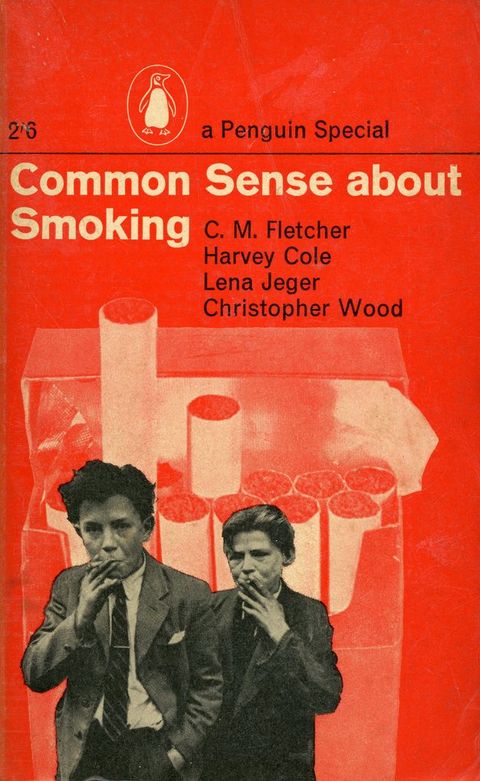
The Role of Delegates and the Coldstream or Pasmore Report Controversy
The picture that emerges from the ministry archives of the Coldstream Council is of how an independent body of respected art world insiders was created, fed inflexible mandates, allowed some interpretive privileges, brought to a (however shaky) consensus, and then presented to the public as responsible for the ensuing reforms. But what of the delegates themselves? It is clear from the meetings’ minutes that the ministry encouraged a form of give and take that resembles collective authorship more closely than personal agency, especially if we appreciate how people working together often synchronise their agency through anticipating the needs, moods, and objectives of the broader group.54 The nature of the council’s preset parameters, and the gap between members’ expertise and what they were asked to decide, were clearly destabilising for many, as this section will explore, but this does not mean that the process was without ego. Anecdotal reflections about the council meetings refer to flaring passions and fierce arguments—such as the architect Misha Black confiding to a colleague about “moving slowly through great tribulations” and the Leicestershire educator Stewart Mason describing them to his biographer as “furious arguments”.55 The fierceness of these debates suggests that many delegates were either not aware of the extent of the ministry’s enmeshment in the enterprise or didn’t see it as a bar to debating the key issues. Topics such as entrance requirements became major points of contention, despite accounts in the minutes of Part trying to move discussions along, since action was never going to be influenced by the council’s considerations.56 If we accept that the council was more of a think tank than an executive body, its value is enhanced by revealing conflicts in the field. For historians now, as for ministerial civil servants then, the records of the meetings are a valuable resource for understanding the conceptual terrain of the art world at a particular time and place, and especially in understanding how creativity was regarded in contrast to practical art skills. There is much to unpick for many art sectors, but continuing our focus on fine art interests, it would be helpful to return to where this article began, by evaluating how Coldstream and Pasmore exerted their influence both within and against the greater pull of the council as a collective. Both men were high-profile artists and influential educators, whose involvement has much to tell us about their how they conceived of art education’s value. An examination of the ministerial records, however, reveals an additional protagonist, Robin Darwin.
54To begin with Coldstream, he was a savvy choice for chair, in terms of the council both as a public relations measure and as a think tank. He had gained public visibility in the 1930s as the pre-eminent Euston Road School painter and an advocate for realism through opinion articles and broadcast interviews, as well as his exhibited work. In the post-Second World War period his activism took a more subtle turn when he became an art school administrator and an adept committeeman. In addition to the social and material benefits of participating in councils, these roles also seem to have represented for him a public duty and a means of advocating for social structures to support the arts, especially emerging artists, including those with notions of practice that conflicted with his.57 His first appointment came at the age of forty with a trusteeship of the National Gallery, and other positions soon followed: the Art Panel of the newly formed Arts Council, the boards of the Tate Gallery, the Whitechapel Gallery, the Royal Opera House, the British Film Institute (where he became their inaugural chairman), and the Minister’s Advisory Committee for the Purchase of Works of Art. He was knighted in 1957 and became Painter to the Society of Dilettanti in 1965.58 If internal Slade committees and panels are included, then—taking 1957 as a representative year—Coldstream was serving on fourteen art boards concurrently. This was a major advantage for the ministry. Coldstream’s experience showed him to be a man who had proved himself able to slip easily between different sectors of the art world and capable of wielding the soft social power on which the mid-twentieth-century art world ran. To quote the historian Margaret Garlake:
5759The power of the postwar art establishment, a small pool of people . . . everyone sat on three or four committees in the intervals between writing books and criticism, organising exhibitions, acting as trustees of one of the national museums, or even making art. . . . Its efficiency depended on the linkage of disparate organisations by multiple membership, which was also a system of mutual restraint, a system where power was a matter or nuance, successfully exercised through an informal network of friends and colleagues rather than the more heavy-weight bludgeoning official positions.59
The disadvantage (at least for his legacy) was that Coldstream’s omnipresence tempts us to read the report in the light of his reputation: the contemporary philosopher Ted Honderich called him the “Prime Minister of British Painting”; the historian Robert Strand dubbed him “King Coldstream”; and Coldstream’s colleague and friend, the influential critic David Sylvester quipped that, “as some people are accident prone, so is he prone to attract official handles . . . and so he has become, not merely a pillar, but a veritable colonnade of the Establishment”.60 Later Sylvester would add to this vivid image that “almost anyone in the British art world who is neither highly established nor a maverick must, I imagine, experience moments of disorientation when he doubts his own existence other than as part of a dream in the mind of Coldstream”, and that “he could very aptly have been called Chairman Coldstream; that would have made him sound like someone responsible for a cultural revolution—which, of course, he was”.61
60This image of godlike authority has dogged Coldstream’s career and legacy, yet the ministerial papers relating to the first report present a picture not of brute power but of a gentle arbitration endeavouring to balance competing interests. He presents himself as humbled by his experience of falling outside general education: he was a fine artist and headed an institute that had remained independent of the ministry, and thus he frequently deferred to those with more design or general educational experience, such as Part, Harte, and his fellow delegate Stewart Mason, an enthusiastic reformer and director of education in Leicestershire. There is a telling entry from 28 September 1958 in the journal of William Townsend, Coldstream’s colleague at the Slade and his Boswell, which came a mere twenty days after his appointment was confirmed by the minister:62
6263We talked about the art examination system . . . It looks as though he will be up against Ministry policy, if not always declared intentions, on several issues if the outcome is to be at all a liberal system. It depressed him a good deal. He began to wonder whether it would be possible to hope for an improvement to the existing examinations or whether he was merely there to fight for a few modifications in a scheme that is so defined already as to be in any case worse than the old. It depressed him a good deal.63
Between meetings he sought guidance and context privately from Part’s team through phone calls, meetings, and long memoranda.64 Harte, who was not only secretary to the council but also to Coldstream as its chair, drafted his welcome speech as well as provided briefings on the ministerial agenda in relation to major debate points.65 The result was that his presence was surprisingly subdued in the early meetings, though his leadership gained momentum around the seventh meeting on 3 May 1960; yet, even then it was Part who voiced the most criticism and set the ideological direction in the meetings.66 Part frequently curbed the concerns of Pasmore, Black, and Darwin by reminding them of the actions that were or were not within their control. There are important resonances, however, between the report’s recommendations and Coldstream’s reforms at the Slade, especially in regard to emphasising art history as part of a greater effort to align art education with the humanities studied at universities, or “a liberal system”, as Townsend called it.
64Coldstream had an enduring interest in improving the image of the artist by professionalising his students: he wanted to ensure that their degrees had academic value and that their studies had intellectual breadth.67 At the Slade he pursued this by integrating the art college with the greater academic institution of University College London (UCL), synchronising the Slade’s and UCL’s term dates, fostering collaboration with other departments, and encouraging students to sit in on academic lectures.68 He also employed resident experts in parallel but related fields, such as the prominent art historians Rudolf Wittkower and Ernst Gombrich and the notable zoologist J. Z. Young, and encouraged the abstract artist Harold Cohen to lecture on cerebral processes.69 It is telling that, in summarising his desired legacy when he presented his resignation to the Slade committee in 1975, he expressed how he “hoped that his efforts to integrate the Slade as an academic department of the College had been successful”.70 In keeping with this, a ministry memorandum from 1958 records a conversation Coldstream had with Part’s team, where he mentions his priorities for the council as art history, the expansion of libraries, and the inclusion of theoretical subjects.71 Coldstream’s fingerprints thus appear strongly on some of the report’s recommendations, in particular its emphasis on the professionalising of art education by making it more intellectually rigorous and including academic courses, among them the complementary studies that were so often interpreted as a mandate for integrating art history into the study of fine art.
67A causal conundrum emerges, however: if Coldstream was known to be sympathetic to ministerial aims before his appointment, to what degree did he shepherd these aims and to what degree did the ministry? He was invited to chair the committee in 1958, yet the ministry had accepted a liberal model as a carry-over from the Freeman Reports of 1952 and 1957 (and many of the specific recommendations entailed therein). Coldstream’s priorities demonstrate that his influence was present but it does not conclusively prove his responsibility in the way that is often discussed in relation to the council. What emerges from the meeting minutes as most impressive about Coldstream’s presence is not his agency in ushering in a conceptual paradigm for art colleges so much as his sensitivity as a leader to compromise and arbitration, to soothing egos, and to balancing various members’ interests against ministerial demands.
Pasmore too brought important considerations to bear on the meetings, and yet there is little evidence that he dominated the council, as Coldstream suggested he had in 1985. Pasmore was in a unique position as the sole delegate from the young ICA, which had been established in 1946 and was one of the few nominees representing a fine art institution, let alone an ambitiously avant-garde one. Thirteen delegates represented the interests of general teaching; eleven represented industrial and commercial design; a mere six represented fine art schools, museums, and collectives; and, last but not least, a solitary art historian.72 The minority status of fine art contributed to Pasmore being at odds with the other delegates. Contrary to the prevailing narrative, this resulted in his and Coldstream becoming allies, if sometimes grudging ones, who together defended the interests of fine art (figs. 17 and 18). One example was Coldstream insisting in an internal memo that Pasmore be added to the course subcommittee to balance those with more conservative approaches.73 This is perhaps not surprising given that the two men shared a long, complicated personal and professional relationship even before the council. They both began as Euston Road painters, but in 1947 Pasmore disavowed realism, becoming instead an outspoken abstractionist and experimenting with geometric constructions across different mediums. Pasmore also experimented with deconstructing and reconstructing traditional teaching methods, developing classes that taught the fundamentals of abstraction—what he called basic design courses. So influential did this approach prove that the historian David Thistlewood, writing in 1981, termed it “the basic design revolution”, characterising it as a watershed between “a system devoted to conformity” and one defined by “a general devotion to the principle of individual creative development”. It was this revolution that Coldstream referred to in his 1985 interview with Morris, when he observed that “the tide of opinion” within the council had been swayed by Pasmore’s success with “the Bauhaus idea”.74 The flair of Thistlewood’s tone gives some idea of passion that often accompanied the adoption of basic design and its later ascension (and normalisation) within the current foundation years, an introductory year on basic art principles before students go on to an undergraduate degree in art making (the shade of the discontinued intermediate diploma).
72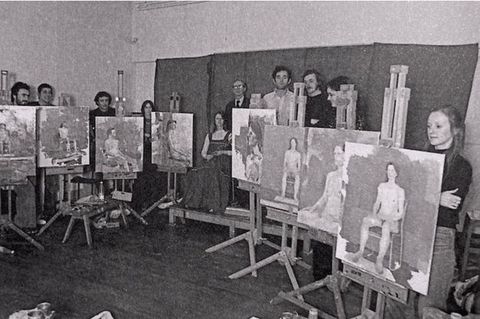
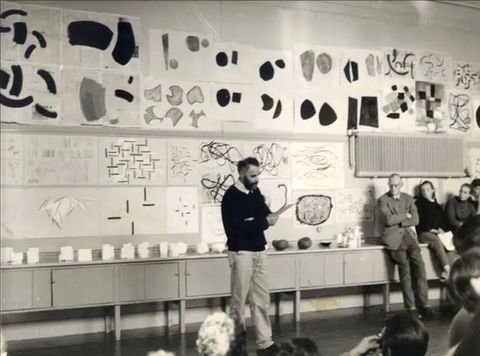
Pasmore developed his version of the basic design course with his fellow artist Richard Hamilton during their time teaching at the Central School of Arts and Crafts under William Johnstone. They each continued to develop the concept after Pasmore moved to the University of Durham and Hamilton went on to King’s College, Newcastle upon Tyne. Their collaboration was extended through an influential two-week summer school for educators, which Pasmore led at Scarborough in Yorkshire. Participants included Pasmore’s wife, the artist Wendy Blood, and two other artists, whom Coldstream named in the 1985 deflection: Harry Thubron and Tom Hudson, both from Leeds College of Art. This period in art history was a productive moment for educational experimentation in Britain, and an array of courses were developed by different educators that were variously called “basic form”, “basic course”, “basic grammar”, and “basic research”.75 They all shared a new approach to art teaching, which was loosely inspired (though some course designers would deny it) by the conceptual and playful experimentations of Johannes Itten’s Vorkurs in the 1920s at the Bauhaus School in Weimar.76 The British basic design courses broke away from figurative or skill-based curricula and replaced it with experimentation with the formal principles of abstraction and with intuitive creativity. This trend gained public attention through the Developing Process exhibition, which Pasmore co-organised with Hamilton, Thubron, and Hudson in 1959, first shown at the Hatton Gallery and then at the ICA.77 It was sensational in that it displayed anonymous examples of students’ research into essential aesthetic and material aspects of art making. Many educators and artists contributed to the catalogue, but Pasmore’s one-page entry came to be something of a manifesto for basic design principles. In it he proclaimed the “new foundations in art training, on a scientific basis”, where “the student is asked to embark not on a static imitative system, but on a dynamic voyage of discovery that means of which are empirical, on the one hand, and analytical on the other” (fig. 19).78 This bears a strong resemblance to the Coldstream Report’s sole guideline for teaching within pre-diploma courses: “to train students in observation, analysis, creative work and technical control through the study of line, form, colour, and space relationships in two and three dimensions”.79 A rival mandate put forward in the meetings by Milner Gray, a prominent designer and a delegate from the Society of Industrial Artists—“[the] aim should be to develop the student’s aesthetic perception, his qualities of draughtsmanship, his intellect, his powers of invention and his capacity to express his thoughts”—indicates the probability that Pasmore ensured that the final version’s wording did not speak exclusively to either liberal values or skill-bound values.80
75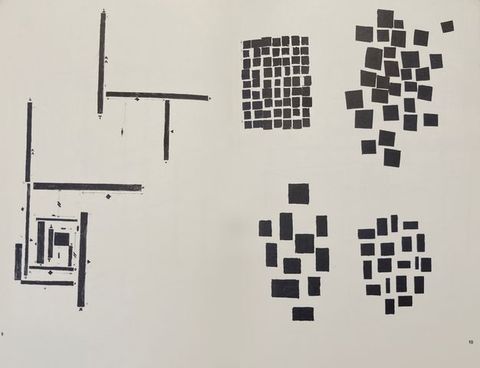
Pasmore is mentioned sixteen times in the minutes. He exerted his influence at key moments of the early meetings, primarily to advocate basic design as a guiding principle for all art education, and he offered to show the council a video of a basic design class, though there is no confirmation that this took place.81 Pasmore’s passion is evident in a note that Harte affixed to a letter she transcribed from Darwin, in which she mentions that the ellipses at the start “were Mr Darwin’s comment on Mr Pasmore who had worn down Mr Darwin and Coldstream for hours telling them what basic form is”.82 A few days later Townsend recorded in his diary how Coldstream was harangued by Pasmore—who was reportedly explaining “his theories and methods and trying to persuade him that no other approach to art teaching was any longer appropriate”.83 This is recorded in the same entry where Townsend describes Pasmore and Hamilton installing the Basic Design exhibition at the ICA.84 And yet, within the council Pasmore’s advocation was largely fruitless, as Harte’s tone of amused weariness suggested. Pasmore was frequently opposed by those concerned with more pragmatic industrial and commercial interests, including the ministry assessors. This was so marked that he became increasingly a silent presence and eventually stopped going to the meetings. After April 1960 he attended only one of the remaining five pre-report meetings: a conspicuous absence. His attendance record was one of the worst on the council. In terms of his influence, Pasmore undoubtedly protected the possibility that basic design could be taught, but he was not successful at mandating it. The wording of the report represents a kind of compromise: it could be used to propose either a life drawing course or a more radical one centred on visual research. This ambiguous wording gives educators the space to innovate along basic design principles and can be seen as a dog whistle to those in the know, but it does not explicitly encourage basic design. Instead, its interpretation for course construction was left to the art colleges and the Summerson Council panels.
81Pasmore’s contributions, however, were not reserved to basic design. He was also an important advocate of creative acumen as its own form of intellect. This emerged primarily during debates about O-level entrance requirements, where he argued (unsuccessfully) that artistic talent should be respected as a separate yet equal form of intelligence—arguing in the first meeting “that artists work with their eyes and hands” and “develop intellectually through art but not by way of abstract study of traditional grammar subjects”.85 The mindset and benchmarks entailed by conforming to humanities undergraduate degrees threatened this. The mood of the council, however, was against him. He was immediately countered by seven of the members and ultimately reminded by Part that entrance requirements were a ministry mandate, since they were required for teaching credentials.86 Part was so amused by Pasmore trying to argue that his own inability “to pass the School Certificate” was evidence of its irrelevance for artists that he recorded it as one of his most lasting memories of the council in his autobiography thirty-one years later.87 The majority of the council understood or were sympathetic to the ministry’s perspective—they were less interested in the vagaries of creativity than in nurturing a new breed of graduate, designer-artists, as I shall discuss in a moment. This may have contributed to Pasmore skipping the council meetings. Across the early ones he appears to have been ground down slowly, contributing increasingly less despite Coldstream’s attempts to protect Pasmore’s position in regard to blocking a narrow craft- rather than concept-based definition of art training.88 This evidence makes it hard to agree with Coldstream’s claim that Pasmore was the true leader of the council. It is likely that Coldstream made his claim in hindsight because of Pasmore’s success with basic design in the wider world, though it is also possible that Coldstream’s dodge was simply part of a tendency to obscurantist humility that he often exhibited. In summary, Pasmore did succeed in creating a space for basic design courses to be proposed, but he failed to protect the idea of artistic intelligence against the pressures of academic conformity. Neural atypicality lost out to the need for tertiary art education to become an interchangeable qualification with other humanities degrees.
85The ministerial archive presents an alternative candidate, Robin Darwin, as the representative of a competing interest: that of design. Darwin was well connected, dogged in his duties, charming when he wanted to be, and a radical reformer of the rebranded RCA, where he was rector from 1948 until 1971. Darwin steered the RCA into becoming a notable and progressive design school that presented a prominent alternative to Coldstream’s vision for the Slade in producing professionalised fine artists.89 As such he was foremost among those engaged in resolving what it meant to foster visual creativity in a new kind of designer, which did not always align with the liberal model favoured by Coldstream. A painter by training, Darwin was introduced to the needs of industrial design during camouflage work in the Second World War. By 1945 he was working for the COID and soon after became secretary to the Training Committee, where he worked closely with the ministry and at whose behest he travelled to observe training institutions in Germany and Sweden. He single-handedly drafted the committee’s fifty-one page “Report on the Training of the Designer” (April 1946),90 in which he discusses the inadequacy of the design educational status quo in Britain in contrast to Bauhaus and European design training.91 At this time the Bauhaus had become a byword for the incorporation of creative work with developing technology and there was much discussion within the COID of how to nurture complementary design communities. This raises an interesting possibility regarding Coldstream’s reference to the tide of opinion in favour of the “Bauhaus idea” in 1985. He may have been conflating what Pasmore came to represent with what Darwin and other COID-affiliated delegates, notably as Pevsner and Gray, were advocating at the time, and importantly, in the council.92
89Darwin brought to the council meetings his interest in forging a new kind of designer. The council had had to walk a thin line between catering to the competing interests of designers, exhibiting artists, politicians, and the voting public, which many within the council regarded as a challenge to heal a rift between artists and designers. On the whole it refused to advocate separate degrees for teachers, designers, and fine artists—the ministry correspondence had assumed this would be enacted—but instead sought a new image for a new kind of graduate, what some called “all rounders” and what Darwin called “advanced designers”, which he contrasted against “designer-craftsmen”.93 This type of hierarchical distinction was common within the council: the fashion designer Elizabeth Wray emphasised the difference between the successful few and the “legions of anonymous designers”.94 Darwin echoed this sentiment in a letter of 1959 to the assessor Sylvia Goodfellow, where he expressed his urge to “exclude paintresses in the potteries and many other craftsmen throughout industry, particularly in the rag trade, whose work affects appearance certainly but who should not by any stretch be termed designers”.95 Darwin’s conception of the “advanced designer” was of a visionary rather than a technologist, who was capable of integrating knowledge of medium and materials with overarching theoretical planning and who had an ability to communicate all this within a boardroom.96 Importantly, these were not conceived of as gifts—unlike those of the artist, who according to Darwin could not be taught—but as skills.97
93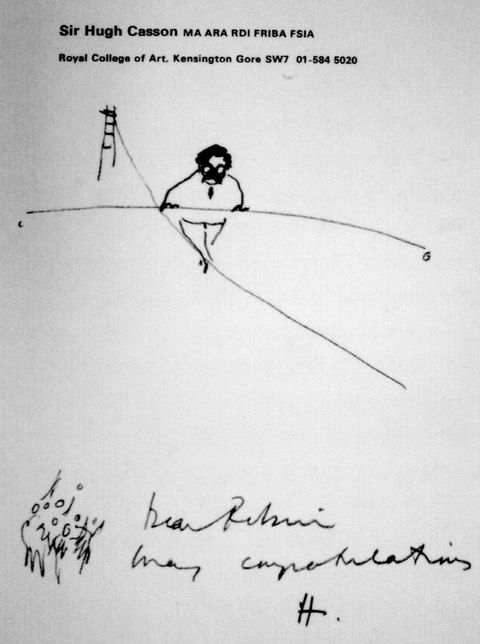
Darwin’s independent relationship with the ministry gave rise to political friction within the council. He had in the early post-war years worked closely with Edward Dickey and F. H. Dowden, the latter of whom was a key assessor to the council. In addition to working with the ministry during his time in the COID Training Section, Darwin had also been one of the original members of the Freeman Committee. He was even consulted by the ministry about who should be appointed chair of what became the Coldstream Council. Interestingly, Darwin strongly advised against Coldstream.98 He wanted instead George Barnes, who as comptroller of the BBC had overseen the dramatic rise of television’s popularity; he thought that Coldstream was out of touch with educational issues and “with anything beyond Paintings save a year or two in Films”.99 This opposition between Darwin and Coldstream went even deeper (fig. 20).100 Townsend recorded that on 17 November 1958 Coldstream was “in a very agitated as well as angry state” after discovering that, without consulting him, Darwin had circulated a letter detailing his own vision for the council’s reforms to all the principals of regional colleges:
98101It hasn’t been too well received by them—suggesting that the whole of the Committee has been rigged in advance. What is worse the responsible counterparts at the Ministry are a little perturbed. Bill sat at his desk unable to concentrate on any other matter, uninterested in his letters, furious with Robin whom he thought of as much worse than an arrogant, officious and thick skinned bounder; as a friend who has betrayed confidence, more humiliating as someone he had misjudged. . . . “What damage has it done to me at the Ministry” was what he asked several times, again this evening as we walked round to Phoebe [Pool]'s for supper. The regard in which he is held by those immediately above him in established authority has always been a value he has appraised with great sensitiveness; a factor he understands has helped him in his career infallibly and now he is enraged to think that Robin may have made his first appearance as a Chairman look messy to the people at the Ministry.101
Darwin’s attempt to assume a leadership role within the council was clearly a challenge to Coldstream’s authority. And yet the ministry did not concede to Darwin in all matters. Appointing Coldstream as chair in defiance of Darwin’s advice is an early example. This reveals a paradox within the ministry’s performance of values: on the one hand it had worked closely with the COID and appeared to agree with reforming design education along the model of more technological European precedents; yet, on the other hand, the ministry had accepted the Freeman recommendations for a more liberal model. Darwin, in contrast, had advocated for specialisations as the only way to achieve the ministry’s goals of fewer years of study while simultaneously improving quality.102
102Whether to make art education more specialised or to incorporate into it more general liberal values was one of the most acrimonious debate points in the meetings. It was second only to discussions of entrance requirements (largely due to Pasmore). The ministry, however, seemed to regard them as compatible. Appointing Coldstream was one reflection of their approach, for it represented their opposition to Darwin and former allies. One explanation is alluded to by a colleague of Darwin’s from COID, J. Beresford Evans, who complained in 1947 that the ministry persistently conceived of design within aesthetic (rather than functional) terms.103 This implies a significant bias towards fine art, even if in the guise of design interests. Darwin’s preferences were ultimately relegated to an advisory report outlining post-diploma study.104 He may have lost the battle for specialisation, but his conception of the advanced designer gained traction, especially combined with Coldstream’s own concept of the artist as a professional. Coldstream understood the status and ambition that an artist needed to thrive, but Darwin expounded in the meetings and in his work with the COID how creativity and a Bauhaus-style interdisciplinarity could round this out. This was not explicitly expressed in the report, but it was articulated in the meetings and applied by both men in their own ways in their institutions. It is hard to prove cause and effect here, but it is possible that the motley group of delegates, pushed to articulate their vision of a new kind of artist, speeded up its realisation in individual minds. It is particularly tempting to see Darwin’s articulation of the advanced designer as related to his work in the RCA, where students with different specialisations were encouraged to mingle and their ability to communicate ideas was nurtured. The so-called golden generation emerged in the mid-1960s, led by RCA graduates such as Pauline Boty, Peter Blake, and David Hockney. They gained celebrity as a new kind of folk hero posing in cigarette advertisements, dancing on national television broadcasts, and generally exercising their creative energy, and are now synonymous with the Swinging Sixties and the precocious rise of British artists on the global scene. I like to think that Darwin’s arguments with Coldstream about what designer-artists should be set in motion the various mechanisms for this ascendancy.
103Conclusion: Reflecting on Collective Responsibility and the Laundering of Consent
How different would history have been if student protesters had disavowed the Pasmore Report as emblematic of the Pasmore reforms? It is possible that Pasmore, with his hipper image and his mesmerising abstract paintings inspired by jazz and mathematical models of growth and flow, might not have become a beacon for a backlash. Or perhaps there would have been less suspicion of bias if the chair not been a painter—the ministry’s first choices for chair were the broadcasting executive George Barnes and the economist Lionel Robbins (later of the Robbins Report).105 And yet, as my research demonstrates, narrowing down the story of power to a single figurehead is misleading. Anytime people are gathered in a committee, authority and intentions become enmeshed and are transmuted into something subtler and often more volatile, which then becomes contingent on the mood of the group. Unpacking influence in committee activity clearly has biographical merit, but to weigh its sociological or conceptual impact sensitively presents an interesting methodological conundrum to art historians.
105A more productive avenue may be to follow more closely the example of philosophers of collective responsibility and group dynamics, such as Wilfrid Sellars and his concept of we-intention. Sellars argued that, in contemplating joint action, we modify our thoughts by stepping into an anticipation of what acting as a “we” will mean.106 A particular attitude is created within the group, which pre-empts practical cooperation. This emerges strongly in the ministry’s archive, where Coldstream, Pasmore, and Darwin all bend their will to the common goal of reforming art colleges in line with design and teacher training needs. Within the council as an interdisciplinary think tank, this fusion of different experiences and perspectives led to a radical reconception of the artist-as-genius as a new kind of designer-artist—or advanced designer as discussed in relation to Darwin’s work in the COID in the previous section. This new kind of cerebral creative, vaunted above their peers who were pursuing craft-oriented equivalents, was (for better or worse) anathema to the students of Hornsey in 1968, and yet it is possible that this same concept, which values artists capable of self-criticality and analytical thinking, led to the budding conceptual turn of the late 1960s and 1970s as well as to current perceptions of artistic identity performances.
106Accusations of the council being Coldstream’s or Pasmore’s lie in another aspect of Sellars’s we-intention: that it is possible for an actor to act on such a group rather than from within (thus not participating with “proper” we-intentions) to exert influence to bring about a predetermined goal. The ministerial records in Kew seem to reject this possibility. The truth (as far as it is possible to recover it) appears to be more subtle and more enmeshed in historical momentum. It is mediated by the mechanisms of group intention, compromise, and (in the case of many mandates) delegation to future councils. This is not a bug but a feature of the process. That Part believed in better communication between government and the governed is valuable here. The recommendations of the various advisory councils shaped ideas as they moved forward, just as Part and his team did. Whether or not we believe that this kind of diffused agency is effective as a mode of governance, especially in relation to the traumatic upending of the previous system, as was the case here, the messy nature of collective authorship should not deter us from digging into its mechanisms: sometimes the effects of these moments in history are as important as they are difficult to pin down.
Acknowledgements
This article is the culmination of over a decade of research tracing the voices of the many individuals involved in the National Advisory Council on Art Education (NACAE) across a myriad of archives. I am especially grateful to the stewards of the ministerial files at The National Archives, Kew; the Antony Part archive at Churchill College, Cambridge; University of Brighton Design Archives; Trinity College Archive, Cambridge; London School of Economics and Political Science (LSE) Archives; and the William Coldstream papers at Tate Archive. I also extend my sincere thanks to the families, friends, and former students of both William Coldstream and Victor Pasmore—in particular Catherine Coldstream—for their invaluable assistance.
About the author
-
 Kate Aspinall is an independent historian, writer, and artist based in London. Her scholarship examines how drawing and painting have shaped British visual culture since 1900, and how the idea of art making shifts across historical moments. Recent work includes a contribution to a Yale University Press volume on Frank Auerbach’s relationship with drawing, and catalogue essays on Walter Sickert’s printmaking for Piano Nobile and on Euan Uglow’s treatment of surface for MK Gallery. She has lectured for the Courtauld, the University of East Anglia, and Yale in London, and has spoken at Tate, the Towner, and Pallant House, as well as on television and for the Arts Society. Her research has been supported by fellowships from the Institute for Advanced Study at Central European University, the European Commission’s STARTS Residencies Program, the Royal Drawing School, and the Rocky Mountain Women’s Institute. She holds degrees from the University of St. Andrews, the Courtauld, and the University of East Anglia.
Footnotes
-
1
Liz Bruchet and Ming Tiampo, “Slade, London, Asia: Contrapuntal Histories Between Imperialism and Decolonization 1945–1989 (Part 1)”, British Art Studies 20, DOI: 10.17658/issn.2058-5462/issue-20/tiampobruchet. ↩︎
-
2
National Advisory Council on Art Education, First Report of the National Advisory Council on Art Education (HMSO, 1960). ↩︎
-
3
Michael Kenny, The First New Left: British Intellectuals After Stalin (Lawrence & Wishart, 1995), 4–5. See also Alexander Cockburn and Robin Blackburn, eds., Student Power: Problems, Diagnosis, Action (Penguin, 1969). ↩︎
-
4
Lisa Tickner, Hornsey 1968: The Art School Revolution (Frances Lincoln, 2008), 20–30. For more on art school student activists’ often loose political affiliation at places such as Hornsey, where Tickner describes engagement as more of “a popular front” than “a sectarian manifesto or creed”, see Tickner, Hornsey 1968, 87. ↩︎
-
5
Debate followed presentation of my paper: Kate Aspinall, “The Pasmore Report? Reflections on the 1960 Coldstream Report and Its Legacy”, Paper presented at the “Art School Educated” conference, Tate Britain, September 2014. ↩︎
-
6
Coldstream, Interview with Lynda Morris from “The Hornsey Project” (1985), quoted in Tickner, Hornsey 1968, 171. ↩︎
-
7
Other examples of the conflation of the Coldstream Report with Coldstream the man include Robert Medley, Drawing from the Life: A Memoir (Faber & Faber, 1983); Hornsey College of Art, The Hornsey Affair (Penguin, 1969); Robert Strand, A Good Deal of Freedom: Art and Design in the Public Sector of Higher Education, 1960–1982 (Council for National Academic Awards, 1987); Don Jones, Stewart Mason: The Art of Education (Lawrence & Wishart, 1988); Tickner, Hornsey 1968; and Bruchet and Tiampo, “Slade, London, Asia”. ↩︎
-
8
Jon Thompson, “Art Education: From Coldstream to QAA”, Critical Quarterly 47, nos. 1–2 (2005): 219. ↩︎
-
9
The National Archives (TNA), Kew, Board of Education and successors: Technical Branch and Further Education Branch: Registered Files, ED 46; National Advisory Council on Art Education: Agenda, Minutes and Papers, ED 206. ↩︎
-
10
Ministry of Education, Minutes of Coldstream Council meetings, TNA, ED 206/46/846; Meetings and correspondence, TNA, ED 46/847–848. Wilma Harte transcribed meetings until Geoffrey F. Cockerill replaced her between the fourth meeting (5 February 1960) and the sixth meeting (1 April 1960); minutes from the fifth meeting are missing. TNA, ED 206/46. ↩︎
-
11
National Advisory Council on Art Education, First Report of the National Advisory Council on Art Education (HMSO, 1960). ↩︎
-
12
For ministry discussions of possible nominees, with some biographies and amusing editorials, see “Note on Membership of the NACAE”, 13 August 1958, TNA, ED 206/46/843, 1–2. ↩︎
-
13
Internal Memoranda, 1958, TNA, ED 206/46/843. ↩︎
-
14
Appendix to Memorandum, 10 June 1958, TNA, ED 206/46/843. ↩︎
-
15
Antony Part, The Making of a Mandarin (Andre Deutsch, 1990), 95. ↩︎
-
16
National Advisory Council, First Report, iii. See also Coldstream Meeting Minutes, 5 February 1959, TNA, ED 206/46, 1. ↩︎
-
17
National Advisory Council on Art Education, Vocational Courses in Colleges and Schools: Second Report of the National Advisory Council on Art Education (HMSO, 1962); National Advisory Council on Art Education, Post-Diploma Studies in Art and Design: Third Report of the National Advisory Council on Art Education (HMSO, 1964); and National Advisory Council on Art Education, The Structure of Art and Design Education in the Further Education Sector: Report of a Joint Committee of the National Advisory Council on Art Education and the National Council for Diplomas in Art and Design (HMSO, 1970). ↩︎
-
18
National Advisory Council, First Report, 2–8. ↩︎
-
19
The concept of liberal (or general) studies was popularised in debates that pitted vocational training against general intellectual training in the 1956 White Paper Technical Education (Cmd 9703, Ministry of Education, February 1956), and became a formal policy category with the Ministry of Education’s Circular 323, issued in 1957. The term “liberal” was used by members of the Coldstream Council (somewhat loosely) to denote a value of general intellectual training as inspired by the medieval artes liberales curricula and popularised in Britain under the aegis of “liberal knowledge” by John Henry Newman in Idea of a University (Basil Montagu Pickering, [1852] 1873). It is thus related to, but was distinct from, “liberal arts” degrees, which were implemented in Britain only in 2010 with the University of Winchester’s BA (Hons.) in Modern Liberal Arts. For more see Bill Bailey and Lorna Unwin, “Fostering ‘Habits of Reflection, Independent Study and Free Inquiry’: An Analysis of the Short-Lived Phenomenon of General/Liberal Studies in English Vocational Education and Training”, Journal of Vocational Education & Training 60, no. 1 (February 2008): 61–74. For more on liberalising in post-Second World War art educational reforms, see Alexander Massouras, “Patronage, Professionalism and Youth: The Emerging Artist and London’s Art Institutions 1949–1988” (PhD thesis, Birkbeck University of London, 2013), 4–69. ↩︎
-
20
Stuart MacDonald, The History and Philosophy of Art Education (University of London Press, 1970), especially 41–59 and 73–115. ↩︎
-
21
Letter to E. Dickey, 24 April 1950, 1.D.ii, Slade School Archive, quoted in Massouras, “Patronage, Professionalism and Youth”, 42. ↩︎
-
22
Strand, A Good Deal of Freedom, 6. ↩︎
-
23
National Advisory Council, First Report, 1. See also “Report by the Course Committee on the Pre-Diploma Courses Entry Requirements for the New Diploma Courses and the principles on which the new diploma courses should be constructed”, 8 April 1959, TNA, ED 46/844, para. 5. ↩︎
-
24
Heather R. Westley, “A Chameleon and a Contradiction: From Pre-Diploma to Foundation”, in Basic Design, exhibition catalogue, eds. Elena Crippa and Beth Williamson (Tate Britain, 2013), 16–17. ↩︎
-
25
Strand, A Good Deal of Freedom, 17–18. ↩︎
-
26
Clipping of Maurice de Sausmarez, “Diploma Daze”, Guardian, 27 June 1963, NAEA, The Maurice de Sausmarez Collection, West Bretton, BHDSPL00356; David Warren Piper, “Introduction”, in After Hornsey, book 1 of Readings in Art and Design Education, ed. David Warren Piper (HarperCollins, 1973), 13. See also David Warren Piper, ed., After Coldstream, book 2 of Readings in Art and Design Education (HarperCollins, 1973); Hornsey College of Art, The Hornsey Affair. ↩︎
-
27
Clive Ashwin, ed., Art Education: Documents and Policies, 1768–1975 (Society for Research into Higher Education 1975), 105; and P. Blake, “A Drawing Lesson” (1996), quoted in Tickner, Hornsey 1968, 106n7. ↩︎
-
28
For the Robbins Report, see Committee on Higher Education, Higher Education: Report of the Committee Appointed by the Prime Minister, Under the Chairmanship of Lord Robbins, 1961–63 (HMSO, 1963). For more on the “Plan for Polytechnics”, see Tickner, Hornsey 1968, 20–30; and MacDonald, History and Philosophy, 355–64. ↩︎
-
29
Part, Making of a Mandarin, 96; Hornsey College of Art, The Hornsey Affair, 78; and Strand, A Good Deal of Freedom, 83. ↩︎
-
30
Tickner, Hornsey 1968, 46. ↩︎
-
31
Tickner, Hornsey 1968, 35, 41–42. ↩︎
-
32
Tickner, Hornsey 1968, 9. ↩︎
-
33
Wilma Harte, “Internal Report about the Development Sub-Committee” to F. H. Dowden, 21 January 1958, TNA, ED 206/46/897. ↩︎
-
34
F. H. Dowden, Memorandum to Wilma Harte, 29 January 1958, TNA, ED 206/46/897. ↩︎
-
35
Gilbert Flemming, Internal Memorandum, 23 June 1958, TNA, ED 206/46/843. ↩︎
-
36
National Advisory Council, Report of the National Advisory Committee on Art Examinations (HMSO, 1952); National Advisory Council, Report on Proposed Changes in the Art Examinations and in the Length of the Diploma Course (HMSO, 1957). ↩︎
-
37
Coldstream Meeting Minutes, 5 February 1959, TNA, ED 206/46, 3. ↩︎
-
38
Coldstream Meeting Minutes, 8 April 1959, TNA, ED 206/46, 2–3. ↩︎
-
39
Henrietta Goodden, Robin Darwin: Visionary Educator and Painter (Unicorn Press, 2015), 81–86, 90–102. ↩︎
-
40
Robin Darwin, “Report on the Training of the Designer” (draft), April 1946, UoBDA, COID file 479, series 7, section 1, para. 1. ↩︎
-
41
Darwin, “Report on the Training of the Designer”, section 2, para. 10. ↩︎
-
42
Part, Making of a Mandarin, 20. ↩︎
-
43
National Advisory Council, First Report, ii. For more on Goodfellow, see Sylvia M. E. Goodfellow, Diary transcript, 1941–44, TCCA, Add. MS a/297. For more on Harte’s work with comprehensive schools, see Wilma Harte, Unpublished typescript addressing Labour’s comprehensive policy, 2 July 1977, LSE, CROSLAND 5/1/19; and Stephen King, “The Ministerial Career of Anthony Crosland 1964–1977” (PhD thesis, Newcastle University, 2018), 24, 74. For Dowden’s work with war artists, see Brian Foss, Art, War, State and Identity in Britain, 1939–1945 (Paul Mellon Centre for Studies in British Art, 2007), 168. ↩︎
-
44
Part, Making of a Mandarin; and Goodfellow, Diary transcript, TCCA, Add. MS a/297. ↩︎
-
45
Harte, Labour’s comprehensive policy, LSE, CROSLAND 5/1/19, 4. ↩︎
-
46
TNA, ED 206/46/897, starting with Wilma Harte, Memorandum to F. H. Dowden, 21 January 1958, 1–14; and TNA, ED 206/46/843, including Gilbert N. Flemming, Letter to Geoffrey Lloyd, Minister of Education (cover letter for Freeman Report files), 18 June 1958. ↩︎
-
47
For entry age, see “Notes of a Discussion in Mr Part’s Room”, 21 March 1958, TNA, ED 206/46/897. For the concentration of courses and minimising expenditure, see Wilma Harte to F. H. Dowden, “Internal report about Development Sub-Committee”, 21 January 1958, TNA, ED 206/46/897. ↩︎
-
48
Part, Making of a Mandarin, 95. ↩︎
-
49
Harte, Labour’s comprehensive policy, LSE, CROSLAND 5/1/19, 7. ↩︎
-
50
Douglas Allen, Draft obituary for Antony Part, 16 January 1990, LSE, Douglas Albert Vivian Allen, Baron Croham collection, CROHAM 48/2. ↩︎
-
51
Part, Making of a Mandarin, 20–21, 55–56, 71; Harte, Labour’s comprehensive policy, LSE, CROSLAND 5/1/19, 19; Goodfellow, Diary transcript, 1941–44, TCCA, Add. MS a/297, 11–13. ↩︎
-
52
Peter Laurie, The Teenage Revolution (Anthony Blond, 1965); Melanie Tebbutt, Making Youth: A History of Youth in Modern Britain (Macmillan, 2016). ↩︎
-
53
Gerald Fowler, copies from workbook related to Open University course “Decision Making in British Education Systems”, 1974, LSE, CROSLAND 5/1, 59. ↩︎
-
54
See Frode Kjosavik et al., “Introduction”, in Husserl’s Phenomenology of Intersubjectivity: Historical Interpretations and Contemporary Applications, ed. Frode Kjosavik et al. (Routledge, 2019), 1. ↩︎
-
55
Misha Black, Letter to G. Russell [director of COID], 7 December 1959, UoBDA, COID file 1692, series 19; Conversation between Stewart Mason and Don Jones, quoted in Jones, Mason, 150. ↩︎
-
56
For example, Coldstream Meeting Minutes, 5 February 1959, TNA, ED 206/46, 3–4; and 8 April 1959, TNA, ED 206/46, 2–3. ↩︎
-
57
Bruchet and Tiampo, “Slade, London, Asia”. ↩︎
-
58
Bruce Laughton, William Coldstream (Yale University Press, 2004), 207. ↩︎
-
59
Margaret Garlake, New Art, New World: British Art in Postwar Society (Paul Mellon Centre for Studies in British Art; Yale University Press, 1998), 11. ↩︎
-
60
Honderich, quoted in Laughton, Coldstream, vii; Strand, A Good Deal of Freedom, 8; David Sylvester, “Grey Eminence”, in About Modern Art: Critical Essays 1948–2000 (Pimlico, 2002), 159. ↩︎
-
61
David Sylvester, “Dark Sunlight”, Sunday Times Magazine, 10 June 1963, 8; David Sylvester, “William Coldstream Memorial Meeting”, Memorial paper presented to the Slade School of Fine Art, University College London (UCL), 24 April 1987, 24, quoted in Beth Williamson, “Art History in the Art School: The Critical Historians of Camberwell”, Journal of Art Historiography 5 (December 2011): 3. ↩︎
-
62
Coldstream was already receiving Ministry briefing papers before his appointment was formally confirmed on 8 September 1958: see William Coldstream, Letter to Wilma Harte, 19 August 1958, and Geoffrey Lloyd, Letter to William Coldstream, 8 September 1958, both TNA, ED 206/46/843. ↩︎
-
63
William Townsend, Journal, 28 September 1958, vol. 27, UCL Archives, TOWNSEND/A/28; see also 6 January and 26 January 1959. ↩︎
-
64
Folder relating to the appointment of the NACAE chairman and folders relating to the first and second NACAE reports, and research reports on vocational courses and the DipAD, TNA, ED 206/46. ↩︎
-
65
For example, Ministry Memorandum (about industry leaders’ disregard for the NDD), 29 December 1958, TNA, ED 206/46; and Wilma Harte, “Chairman’s Brief”, 6 April 1959, TNA, ED 206/46, 3–4. ↩︎
-
66
Coldstream Meeting Minutes, 3 May 1960, TNA, ED 46/847. ↩︎
-
67
Massouras, “Patronage, Professionalism and Youth”, 38–41. ↩︎
-
68
Liz-Ann Bawden, dir., Tribute to William Coldstream on His Retirement from the Slade, 1975, Tate Library, TAV 1748CD. ↩︎
-
69
Laughton, Coldstream, 160; Bruchet and Tiampo, “Slade, London, Asia”, particularly the section on “Schema and Correction: Repositioning Art Histories”. ↩︎
-
70
Stephen Chaplin, “A Slade School of Fine Art Archive Reader: A Compendium of Documents 1868–1975” (unpublished manuscript, 1998), para. 9.33, quoted in Massouras, “Patronage, Professionalism and Youth”, 38. ↩︎
-
71
Sylvia M. E. Goodfellow, “Notes from a call ‘Interview Memorandum’ with William Coldstream”, 24 September 1958, TNA, ED 206/46/843. For innovations at the Slade see Laughton, Coldstream, 158–69; and Massouras, “Patronage, Professionalism and Youth”, 25–58. ↩︎
-
72
National Advisory Council on Art Education, Internal memorandum listing members, undated [1958], TNA, ED 206/46. ↩︎
-
73
Internal memorandum [chair’s briefing], 6 April 1959, TNA, ED 206/46. ↩︎
-
74
David Thistlewood, A Continuing Process: The New Creativity in British Art Education, 1955–65, exhibition catalogue (ICA, 1981), 4. For more on Pasmore, see Alistair Grieve, ed., Victor Pasmore: Writings and Interviews (Tate Publishing, 2010). For more on Basic Design, see MacDonald, History and Philosophy, 365–78; Crippa and Williamson, Basic Design; Beth Williamson, “Colour Pedagogy in the Post-Coldstream Art School”, in The London Art Schools, eds. Nigel Llewellyn and Beth Williamson (Tate Publishing, 2015), 115–31; and Beth Williamson, Between Art Practice and Psychoanalysis (Routledge, 2020), 99–101. ↩︎
-
75
Crippa and Williamson, “Introduction”, in Basic Design, 6. ↩︎
-
76
László Moholy-Nagy, The New Vision: Fundamentals of Design, Painting, Sculpture, Architecture (W. W. Norton, 1938); Johannes Itten, Design and Form: The Basic Course at the Bauhaus (Thames & Hudson, 1964). ↩︎
-
77
Victor Pasmore et al., eds., The Developing Process: Work in Progress Towards a New Foundation of Art Teaching as Developed at the Department of Fine Art, King’s College, Durham University, Newcastle upon Tyne, and at Leeds College of Art, exhibition catalogue (King’s College, University of Durham, 1959). ↩︎
-
78
Victor Pasmore, “A Developing Process in Art Teaching”, in The Developing Process, 3. ↩︎
-
79
National Advisory Council, First Report, 1. ↩︎
-
80
Coldstream Meeting Minutes, 5 February 1959, TNA, ED 206/46, 4. ↩︎
-
81
Coldstream Meeting Minutes, 5 March 1959, TNA, ED 206/46, 3–4. It is possible that the film mentioned was the thirty-minute Drawing the Figure (1963), filmed by John Jones during a class run by Harry Thubron and documenting the latter’s ten-day workshop at the Byam Shaw School in London. Crippa and Williamson, “Introduction”, 10–11. ↩︎
-
82
Wilma Harte, Memorandum, 14 April 1959, TNA, ED 46/844. ↩︎
-
83
Townsend, Journal, 17 April 1959, vol. 27, UCL Archives, TOWNSEND/A/28. ↩︎
-
84
Townsend, Journal, 17 April 1959, vol. 27, UCL Archives, TOWNSEND/A/28. For more on the Developing Process exhibition, see the entry for 29 April 1959. ↩︎
-
85
Coldstream Council Minutes, 5 February 1959, TNA, ED 206/46, 3. ↩︎
-
86
Coldstream Council Minutes, 5 February 1959, TNA, ED 206/46, 3–4. ↩︎
-
87
Part, Making of a Mandarin, 96. ↩︎
-
88
Internal memorandum (“Chairman’s Briefing”), 6 April 1959, TNA, ED 206/46. ↩︎
-
89
Goodden, Darwin, 108–29, 155–66; Stuart MacDonald, A Century of Art and Design Education: From Arts and Crafts to Conceptual Art (Lutterworth Press, 2005), 155; Mervyn Levy, “The Royal College of Art”, Studio 165, no. 841 (April 1963): 187. ↩︎
-
90
Darwin, “Report on the Training of the Designer”. For more on Darwin’s research abroad into design training, see UoBDA, COID file 492. For reactions and revisions to the report, see also general papers in UoBDA, COID file 434, series 7 (1945–46). ↩︎
-
91
Darwin, “The Training of the Industrial Designer”, Paper presented to the Royal Society of Arts, London, February 1949; see also Goodden, Darwin, 96–97. ↩︎
-
92
Nikolaus Pevsner, “Memorandum of the Position of the Designer for British Industries after the War”, circa 1945–46, UoBDA, COID file 670, series 19. See also Michael T. Saler, The Avant-Garde in Interwar England: Medieval Modernism and the London Underground (Oxford University Press, 1999), 131; and MacDonald, History and Philosophy, ch. 46. ↩︎
-
93
Robin Darwin, “Report on the Training of the Designer”, part 2, para. 4. ↩︎
-
94
Elizabeth Wray, Coldstream Meeting Minutes, 5 March 1959, TNA, ED 206/46, para. 8. See also Elizabeth Wray, Fashion as a Career: A Lecture Delivered at Leicester College of Art (Leicester: Leicester College of Art, 1944); and Elizabeth Wray and F. R. Morris, Dress Design (Studio Publications, 1953). ↩︎
-
95
Robin Darwin, Letter to Sylvia M. E. Goodfellow, 24 April 1959, TNA, ED 46/844. ↩︎
-
96
Darwin, “Report on the Training of the Designer”, part 2, para. 5. ↩︎
-
97
Summary of a meeting between representatives from the Board of Trade and the COID about Darwin’s training report, 1947, UoBDA, COID file 479, series 7. ↩︎
-
98
Robin Darwin, Letter to Anthony Part, 19 June 1958, TNA, ED 206/46/843. ↩︎
-
99
Darwin, Letter to Part, 19 June 1958, TNA, ED 206/46/843. ↩︎
-
100
Massouras, “Patronage, Professionalism and Youth”, 40. ↩︎
-
101
Townsend, Journal, 17 November 1958, vol. 27, UCL Archives, TOWNSEND/A/28. ↩︎
-
102
See especially Coldstream Meeting Minutes, 8 April 1959, TNA, ED 206/46, 3; and Coldstream Meeting Minutes, 27 May 1960, TNA, ED 46/86, 5. ↩︎
-
103
J. Beresford Evans, Letter to Gordon Russell, 10 February 1947, UoBDA, COID file 670, series 19. ↩︎
-
104
Darwin, “Post-Diploma Courses”, draft, April 1960, TNA, ED 46/847. ↩︎
-
105
“Note on Membership of the NACAE”, 13 August 1958, TNA, ED 206/46/843, 1–2. ↩︎
-
106
Wilfrid Sellars, Science and Metaphysics: Variations on Kantian Themes (D. Reidel, 1968), 217. ↩︎
Abbreviations
COID Council of Industrial Design
LSE London School of Economics and Political Science
NACAE National Advisory Council on Art Education
NAEA The National Arts Education Archive
NCDAD National Council for Diplomas in Art and Design
NDD National Diploma in Design
RCA Royal College of Art
TCCA Trinity College Archive, Cambridge
TNA The National Archives
UCL University College London
UoBDA University of Brighton Design Archives
YBAs Young British Artists
Bibliography
Archive Sources
Churchill Archives Centre, Churchill College, Cambridge. The Papers of Sir Antony Part. Miscellaneous papers collected by Part. GBR/0014/PART 5.
London School of Economics and Political Science (LSE), London. Charles Anthony Raven Crosland collection. Short memoir by Wilma Harte. Copies of workbook by Gerald Fowler, 1974. CROSLAND/5/1.
London School of Economics and Political Science (LSE), London. Douglas Albert Vivian Allen, Baron Croham collection. Draft obituary for Antony Part by Douglas Allen, 16 January 1990. CROHAM 48/2.
The National Archives (TNA), Kew. Board of Education and successors [including Ministry of Education], Technical Branch and Further Education Branch, Registered Files. ED 46.
The National Archives (TNA), Kew. National Advisory Council on Art Education: Agenda, Minutes and Papers. ED 206.
The National Arts Education Archive (NAEA), West Bretton. The Maurice de Sausmarez Collection. Clipping of Maurice de Sausmarez, “Diploma Daze”, Guardian, 27 June 1963. BHDSPL00356.
The National Arts Education Archive (NAEA), West Bretton. The Victor Pasmore Collection. BHVPPD00082-00134; BHVPPD00001-00134.
The National Gallery Archive, London. Minutes of the Board of Trustees and Trustee Correspondence. NG26/19/1.
Tate Gallery Archive, London. Personal Papers of Sir William Coldstream. TGA 8922.
Trinity College Archive, Cambridge (TCCA). Papers of Lord Butler. Typescript diary of Sylvia Goodfellow as private secretary to R. A. Butler. Add. MS a/297.
University of Brighton Design Archives (UoBDA). Council of Industrial Design collection. COID files 479, 492, 670, 1692.
University College London (UCL) Archives. William Townsend Journals. Vols. 17–32. TOWNSEND/A/18–33.
University College London (UCL) Records. Office files from Coldstream’s tenure as Slade Professor. UCLCA/4/1/2/4.
The Whitechapel Gallery, London. Board of Trustees Papers. WAG/TRU/1/3.
Printed Sources
Ashwin, Clive, ed. Art Education: Documents and Policies, 1768–1975. Society for Research into Higher Education, 1975.
Aspinall, Kate. “The Pasmore Report? Reflections on the 1960 Coldstream Report and Its Legacy”. Paper presented at The Art School Educated Conference, Tate Britain, September 2014.
Bailey, Bill, and Lorna Unwin. “Fostering ‘Habits of Reflection, Independent Study and Free Inquiry’: An Analysis of the Short-Lived Phenomenon of General/Liberal Studies in English Vocational Education and Training”. Journal of Vocational Education & Training 60, no. 1 (February 2008): 61–74.
Bruchet, Liz, and Ming Tiampo. “Slade, London, Asia: Contrapuntal Histories Between Imperialism and Decolonization 1945–1989 (Part 1)”. British Art Studies 20. DOI: 10.17658/issn.2058-5462/issue-20/tiampobruchet.
Chaplin, Stephen. “A Slade School of Fine Art Archive Reader: A Compendium of Documents 1868–1975”. Unpublished manuscript, 1998.
Cockburn, Alexander, and Robin Blackburn, eds. Student Power: Problems, Diagnosis, Action. Penguin, 1969.
Committee on Higher Education. Higher Education: Report of the Committee Appointed by the Prime Minister, Under the Chairmanship of Lord Robbins, 1961–63. HMSO, 1963.
Crippa, Elena, and Beth Williamson, eds. Basic Design. Tate Publishing, 2013. Exhibition catalogue: Tate Britain.
Darwin, Robin. “The Training of the Industrial Designer”. Paper presented to the Royal Society of Arts, London, February 1949.
Department of Education and Science. A Plan for Polytechnics and Other Colleges: Higher Education in the Further Education System. HMSO, 1966.
de Sausmarez, Maurice. “Diploma Daze”. Guardian, 27 June 1963, clipping, The National Arts Education Archive (NAEA), West Bretton, The Maurice de Sausmarez Collection, BHDSPL00356.
Foss, Brian. Art, War, State and Identity in Britain, 1939–1945. Paul Mellon Centre for Studies in British Art, 2007.
Garlake, Margaret. New Art, New World: British Art in Postwar Society. Paul Mellon Centre for Studies in British Art; Yale University Press, 1998.
Goodden, Henrietta. Robin Darwin: Visionary Educator and Painter. Unicorn Press, 2015.
Grieve, Alistair, ed. Victor Pasmore: Writings and Interviews. Tate Publishing, 2010.
Hornsey College of Art. The Hornsey Affair. Penguin, 1969.
Itten, Johannes. Design and Form: The Basic Course at the Bauhaus. Thames & Hudson, 1964.
Jones, Don. Stewart Mason: The Art of Education. Lawrence & Wishart, 1988.
Kenny, Michael. The First New Left: British Intellectuals After Stalin. Lawrence & Wishart, 1995.
King, Stephen. “The Ministerial Career of Anthony Crosland 1964–1977”. PhD thesis, Newcastle University, 2018.
Kjosavik, Frode, Christian Beyer, and Christel Fricke. “Introduction”. In Husserl’s Phenomenology of Intersubjectivity: Historical Interpretations and Contemporary Applications, edited by Frode Kjosavik, Christian Beyer, and Christel Fricke. Routledge, 2019.
Koops, Willem, and Michael Zuckerman. Beyond the Century of the Child: Cultural History and Developmental Psychology. University of Pennsylvania Press, 2003.
Laughton, Bruce. William Coldstream. Yale University Press, 2004.
Laurie, Peter. The Teenage Revolution. Anthony Blond, 1965.
Levy, Mervyn. “The Royal College of Art”. Studio 165, no. 841 (April 1963): 186–95.
MacDonald, Stuart. The History and Philosophy of Art Education. University of London Press, 1970.
MacDonald, Stuart. A Century of Art and Design Education: From Arts and Crafts to Conceptual Art. Lutterworth Press, 2005.
Massouras, Alexander. “Patronage, Professionalism and Youth: The Emerging Artist and London’s Art Institutions 1949–1988”. PhD thesis, Birkbeck University of London, 2013.
Medley, Robert. Drawing from the Life: A Memoir. Faber & Faber, 1983.
Moholy-Nagy, László. The New Vision: Fundamentals of Design, Painting, Sculpture, Architecture. W. W. Norton, 1938. Originally published 1929; translated into English 1932.
National Advisory Committee on Art Examinations. Report of the National Advisory Committee on Art Examinations. HMSO, 1952.
National Advisory Committee on Art Examinations. Report on Proposed Changes in the Art Examinations and in the Length of the Diploma Course. HMSO, 1957.
National Advisory Council on Art Education. First Report of the National Advisory Council on Art Education. HMSO, 1960.
National Advisory Council on Art Education. Vocational Courses in Colleges and Schools: Second Report of the National Advisory Council on Art Education. HMSO, 1962.
National Advisory Council on Art Education. Post-Diploma Studies in Art and Design: Third Report of the National Advisory Council on Art Education. HMSO, 1964.
National Advisory Council on Art Education. The Structure of Art and Design Education in the Further Education Sector: Report of a Joint Committee of the National Advisory Council on Art Education and the National Council for Diplomas in Art and Design. HMSO, 1970.
Newman, John Henry. Idea of a University. Basil Montagu Pickering, 1873. First published 1852.
Part, Antony. The Making of a Mandarin. Andre Deutsch, 1990.
Pasmore, Victor, Richard Hamilton, Harry Thubron, and Tom Hudson, eds. The Developing Process: Work in Progress Towards a New Foundation of Art Teaching as Developed at the Department of Fine Art, King’s College, Durham University, Newcastle upon Tyne, and at Leeds College of Art. King’s College, 1959. Exhibition catalogue: Hatton Gallery, Newcastle upon Tyne; Institute of Contemporary Arts, London.
Piper, David Warren, ed. After Hornsey. Book 1 of Readings in Art & Design Education. HarperCollins, 1973.
Piper, David Warren, ed. After Coldstream. Book 2 of Readings in Art & Design Education. HarperCollins, 1973.
Powell, Michael. “The Emergence of the English Art School System”. EdD thesis, University of Sheffield, 2023.
Rogers, Sophie. “International Students at UK Universities”. Complete University Guide. 1 August 2023. https://www.thecompleteuniversityguide.co.uk/student-advice/where-to-study/international-students-at-uk-universities.
Saler, Michael T. The Avant-Garde in Interwar England: Medieval Modernism and the London Underground. Oxford University Press, 1999.
Sellars, Wilfrid. Science and Metaphysics: Variations on Kantian Themes. D. Reidel, 1968.
Strand, Robert. A Good Deal of Freedom: Art and Design in the Public Sector of Higher Education, 1960–1982. Council for National Academic Awards, 1987.
Sylvester, David. “Grey Eminence”. In About Modern Art: Critical Essays, 1948–2000. Pimlico, 2002. Originally published in New Statesman, 27 April 1962, 608–9.
Sylvester, David. “Dark Sunlight”. Sunday Times Magazine, 10 June 1963, 8.
Tebbutt, Melanie. Making Youth: A History of Youth in Modern Britain. Macmillan, 2016.
Thistlewood, David. A Continuing Process: The New Creativity in British Art Education, 1955–65. Institute of Contemporary Arts, 1981. Exhibition catalogue: ICA.
Thompson, Jon. “Art Education: From Coldstream to QAA”. Critical Quarterly 47, nos. 1–2 (2005): 215–25.
Tickner, Lisa. Hornsey 1968: The Art School Revolution. Frances Lincoln, 2008.
Williamson, Beth. “Art History in the Art School: The Critical Historians of Camberwell”. Journal of Art Historiography 5 (December 2011): 1–18.
Williamson, Beth. “Colour Pedagogy in the Post-Coldstream Art School”. In The London Art Schools, edited by Nigel Llewellyn and Beth Williamson. Tate Publishing, 2015.
Williamson, Beth. Between Art Practice and Psychoanalysis. Routledge, 2020.
Wray, Elizabeth. Fashion as a Career: A Lecture Delivered at Leicester College of Art. Leicester College of Art, 1944.
Wray, Elizabeth, and F. R. Morris. Dress Design. Studio Publications, 1953.
Imprint
| Author | |
|---|---|
| Date | 30 September 2026 |
| Category | Article |
| Review status | Peer Reviewed (Double Blind) |
| License | Creative Commons Attribution-NonCommercial 4.0 International (CC BY-NC 4.0) |
| Downloads | PDF format |
| Article DOI | https://doi.org/10.17658/issn.2058-5462/issue-30/kaspinall |
| Cite as | Aspinall, Kate. “Laundering Consent: Reconsidering Responsibility for the Coldstream Report of 1960.” In British Art Studies. London and New Haven: Paul Mellon Centre for Studies in British Art and Yale Center for British Art, 2026. https://doi.org/10.17658/issn.2058-5462/issue-30/kaspinall. |